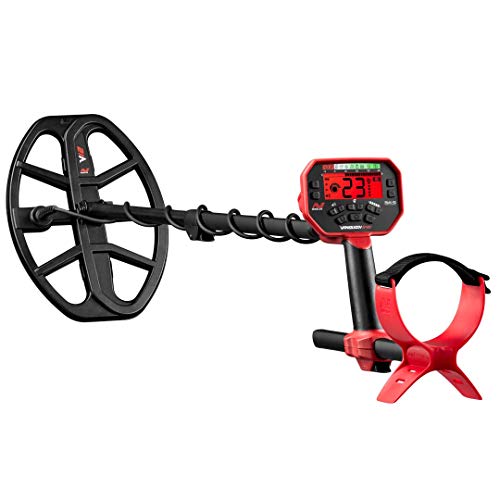
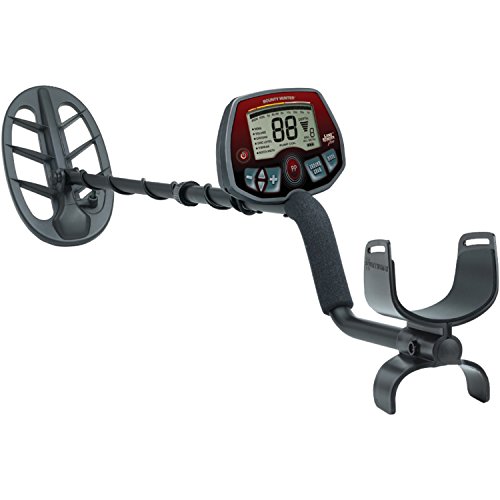
The first detector matters less for how deep it goes and more for whether it tells you the truth about what is under the coil. A beginner who digs thirty pull tabs in an afternoon stops detecting.
The one most clubs hand a newcomer, and for good reason: the target ID is honest enough that you stop digging junk within a session, and the iron audio lets you hear trash before you dig it.
Multi-frequency at an entry price, which is the single biggest technical advantage on this list - it reads targets in mineralised soil and on the beach where single-frequency machines get confused.
The cut-down ACE: same honest behaviour as the 300 with fewer segments on the display and no iron audio. Fine as a first machine, frustrating by the second season.
The top of the ACE line: adds iron audio, a frequency adjustment and a better stock coil. More machine than a first-time user needs, but the one you would not outgrow.
The classic cheap starter. It will find coins, and it will also send you digging a great deal of iron - which is exactly why so many people try detecting once and stop.
The stripped Simplex. Waterproof and light, but with the features removed that made the Ultra worth recommending - and priced close enough to it to be an awkward middle.
Behind the generic 90,500 searches a month for "metal detector" sit the questions people actually ask before they choose. Two of the biggest are about gold and about depth - both encouraged by the marketing on the box, and both setting beginners up to be disappointed by a machine that is otherwise fine.
That is why target ID honesty carries as much weight here as depth potential. A detector that reliably tells a coin from a pull tab will find you more than one that reaches deeper and lies about what is down there.
Specifications as published by each maker. Where a listing does not state a figure we write "not stated" rather than a dash - the maker being quiet about a number is not the same as the machine lacking it.
What buyers actually ask before they choose, per month
waterproof metal detector
9900
metal detector for gold
8100
metal detector for beginners
6600
can a metal detector detect gold
2900
how to use a metal detector
880
how deep can a metal detector detect
590
where can i go metal detecting near me
140
Google Ads search volume, United States, September 2026. The generic term "metal detector" runs at 90,500 a month and is left out of the chart - at that scale every other bar becomes invisible, and it tells you nothing about what a buyer wants.
What we measured
Turn on and go25%
How much a first-time user has to learn before the machine is useful: preset modes, menu depth, and whether the factory settings are sensible.
Target ID honesty25%
How finely the machine reports conductivity and whether it separates iron by tone. Digging junk is what makes beginners quit, so this carries the same weight as depth.
Depth potential20%
Assessed from coil size, operating frequency and whether the machine is single- or multi-frequency - the things that actually govern depth in real soil.
Build and weather20%
Coil and control-box sealing, shaft rigidity, and whether it survives wet grass, rain or shallow water.
What you get10%
What ships in the box against what you will have to buy separately - the kit is what sets your real total price.
Yes, but not the way the marketing implies. Any detector will find a gold ring or coin, because those are decent-sized conductive targets. Finding small natural gold flakes and nuggets is a different job that needs a high-frequency or specialist gold machine, and mostly in ground that actually has gold in it. A general-purpose beginner detector is the right tool for jewellery and coins, not for prospecting.
How deep can a metal detector detect?
For an entry-level machine, expect roughly 6 to 10 inches on a coin-sized target in ordinary soil - not the two or three feet quoted on boxes, which refers to large objects like pipes. Depth also falls sharply in mineralised or wet salty ground.
What is the best metal detector for a complete beginner?
The one whose target ID you can trust. Digging junk is what makes people quit, so honest discrimination matters more than an extra inch of depth. On our scoring the Garrett ACE 300 separates coins from pull tabs most reliably at a sensible price.
Do I need a waterproof detector?
Only if you will actually put it in water. Most machines have a waterproof coil, which covers wet grass and shallow puddles. Fully submersible bodies matter for beach, river and lake hunting - and that is a real price step, so decide before you buy rather than after.
What does target ID actually tell you?
It is a conductivity estimate shown as a number or a segment, not an identification. It reliably groups iron away from coins, and it is much less reliable at telling a pull tab from a gold ring - which is why experienced detectorists dig some trash on purpose.
How much should a first metal detector cost?
Enough to get honest target ID, which in practice means the low-to-mid range rather than the cheapest shelf. Below that, the money saved is spent again in wasted digging - and in most cases in giving up.
What else do I need besides the detector?
A digging tool you will not break, a pinpointer, headphones and something to carry finds and trash in. Only some of these come in the box, which is why we score what you get separately from the machine itself.
How long does it take to get good?
A few sessions to stop digging obvious iron, a season to read your machine's tones confidently. The learning is mostly in your ears, not the settings menu.
Is metal detecting legal?
It depends entirely on where you stand. Rules differ between private land, public parks, beaches, state land and protected sites, and they change. Always get the landowner's permission and check the current rules for that specific place - we deliberately do not publish location-by-location rules here, because outdated legal guidance is worse than none.
Can a metal detector find things under concrete or in walls?
Not usefully. Hobby detectors are built to read a few inches of soil. Locating rebar, pipes or wiring is a job for a purpose-built stud or line locator.
Why does my detector beep when there is nothing there?
Usually electrical interference, ground mineralisation, or the sensitivity set too high for the conditions. Lower sensitivity slightly and run the ground balance - a stable, quieter machine finds more than a noisy one.
How did we score these detectors?
Five weighted criteria: turn on and go, target ID honesty, depth potential, build and weather, and what is in the box. This is a desk comparison from published specifications - the methodology page sets out exactly what that does and does not tell you. Scores are set before any retailer link is attached.